
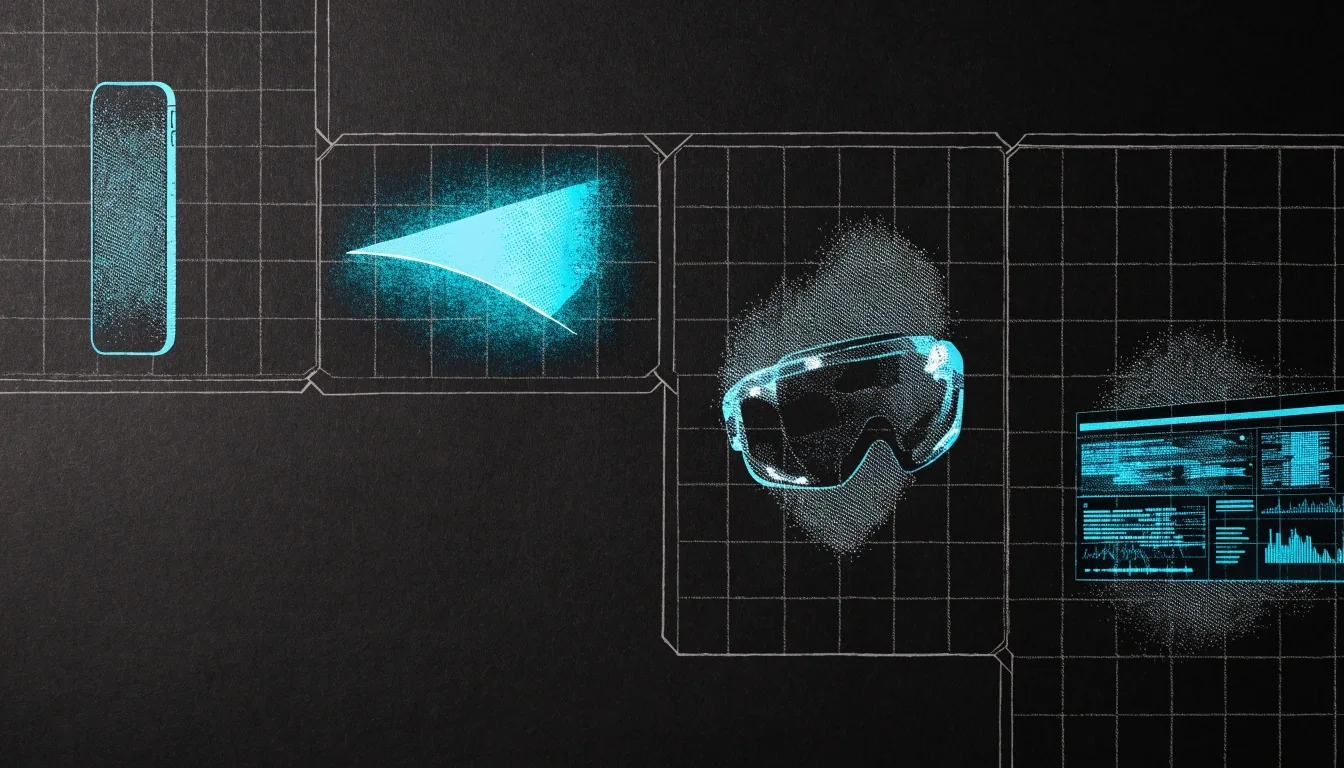
Services · Brussels
Four services, one product discipline
ZENITEX HOLDING GROUP builds custom web applications, mobile platforms, immersive 3D experiences and data-driven storytelling. These four services share a method, but they solve different problems. This page explains each one, so you can decide which fits your project.
The shared method
Different problems, one way of working
Whichever of the four services a project lands in, the method behind it does not change. We plan the data model before we plan the screens. We decide what a stranger has to understand in the first two minutes, not the last week of the build. And we hand the work over with a running system, not a screenshot deck.
The four services below are the entry points a client usually names first. Most projects move through more than one, and the sections further down this page describe how they connect.
The four services
Read across, pick one
Each row is one service. The sections after this one go into detail on scope, constraints and what we need from you before quoting.
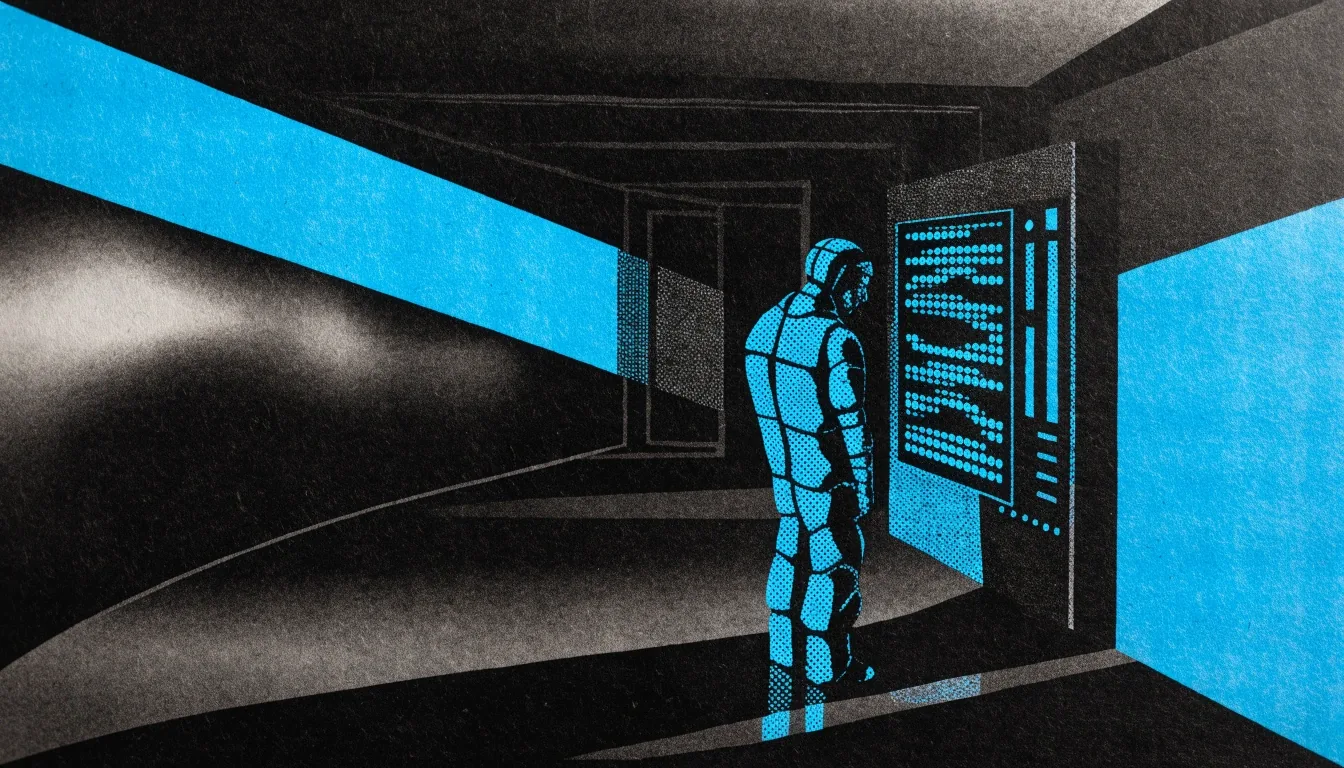
Studio, Brussels
Wall-mounted interfaces are the ones users meet standing up, in a corridor, with a colleague waiting behind them. That reading condition shapes everything about how we build one.
Service one
Custom web application development
A web application is software with a login. Dashboards, portals, booking engines, internal tools, platforms that replace a manual process. We build the interface and the system behind it: Laravel or Symfony on the server, React or Vue in the browser, APIs joining the two.
The decision that shapes everything else is what happens to your existing data. If a system already holds records, we plan the migration first. If nothing exists yet, we design the data model before the screens. Both paths are normal, and both are cheaper to get right at the start.
You already have data
We start by mapping the records, the owners of each field and the failure modes. The migration plan is written before the first screen is drawn, so the interface never ends up describing a data model that does not exist.
You are starting from nothing
We define the data model first — entities, relationships, permissions, what a record looks like across its lifetime — and only then sketch the interface. It costs less to change a model than to rebuild a screen around it.
Service two
Mobile platform development
We build cross-platform apps for iOS and Android, usually from one codebase, with native modules where device features demand them. The common pattern: a web platform exists, and the mobile app has to extend it rather than duplicate it.
Practical constraints drive the design here. Offline behaviour, notification timing, camera and location permissions, and what the app does when the network drops. These are the details that decide whether an app stays installed, and they get decided in the first weeks, not the last.
If your team already runs a Belgian or European web platform, the phone build usually starts by auditing what the web version already does well and where a phone genuinely changes the job. Screens that only mirror a desktop dashboard rarely survive a second month on someone's phone.
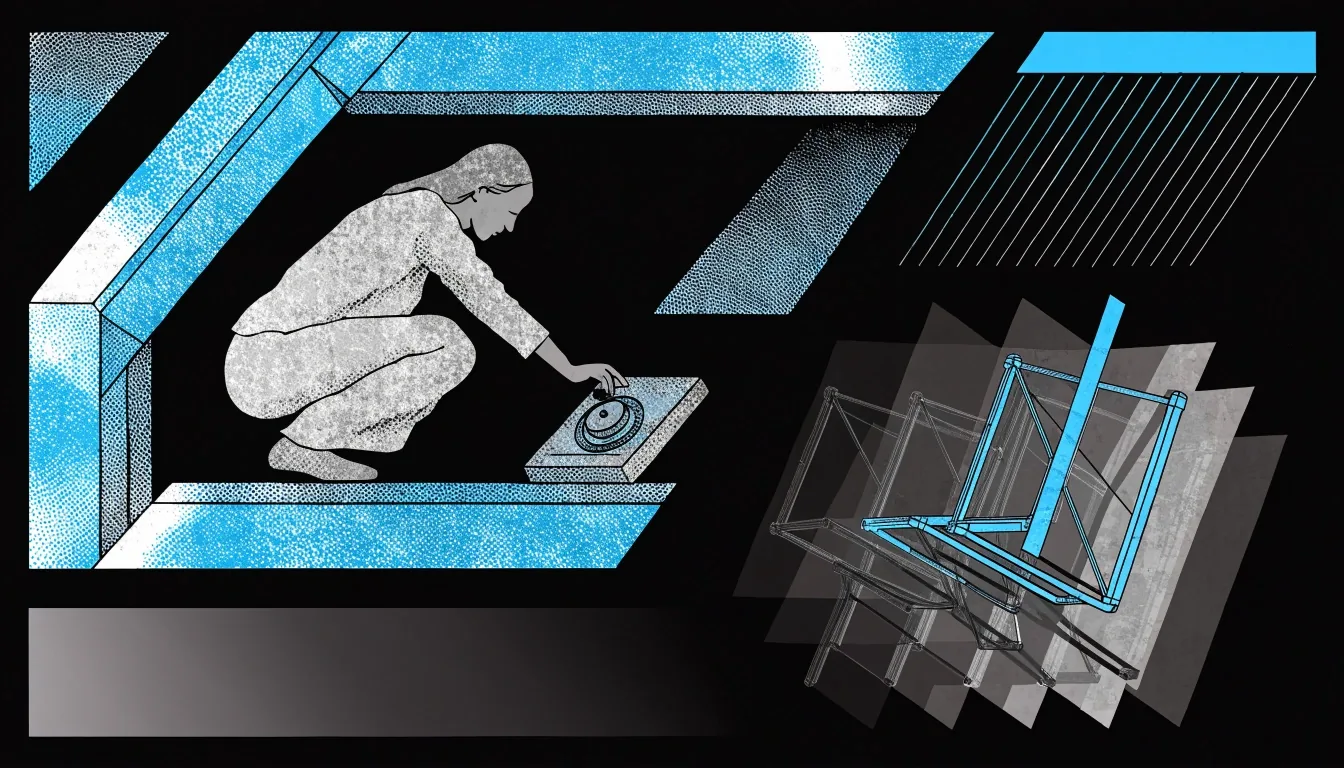
Configurators
A configurator is the case where the immersive service pays for itself: the visitor needs to see a variation before committing to it. That is a job 3D does better than a photograph.
Service three
Immersive experience design and WebGL
WebGL runs 3D inside a normal browser page. No installation, no headset, no plugin. That is why it fits commerce and education particularly well: the friction of asking someone to install software is where most immersive concepts lose their audience.
We also build installations for exhibitions, events and public spaces, combining sensors, visuals and user motion or touch. These projects behave differently from apps. The interface is used once, by a stranger, for under two minutes. It has to be legible without instruction.
Two contexts, two briefs
Commerce and education
The visitor arrives from a page, expects the experience to load in seconds, and can leave with a click. Everything the scene does has to justify the browser tab.
Exhibitions and public space
The visitor arrives without context, stands in front of the work, and gets described by a colleague to a stranger in less than two minutes. Legibility without instruction is the first requirement, not the last.
Service four
Data-driven storytelling
This service turns a dataset into something a person can navigate. Instead of a static chart pack, the reader moves through a sequence: here is the context, here is the change, here is what it means. Public bodies and corporate communication teams in Belgium commission this work because they need to explain something complex to a non-specialist audience.
The hard part is editorial, not technical. Someone has to decide what the reader should understand first. We do that as part of the build, not as an afterthought.
The reader's sequence
- Context What the numbers are, where they come from, and what a reader has to know before the change means anything.
- Change The one comparison that carries the story — not every series the dataset offers.
- Meaning What a non-specialist should walk away with, in one sentence they can repeat to someone else.
On its own
Prototyping, as a service on its own
You can commission a prototype without committing to a full build. We produce something clickable, testable with real users, and honest about what is missing. This is often the right first step when a product idea needs a decision from a board, a partner or a client.
Prototypes are priced and scheduled separately, and they are the fastest way to find out whether a concept survives contact with the people who have to use it.
Read about our processWhich service do you need
Four entry points, one fit
If two or three of these apply, that is normal and usually a sign the project is a platform rather than a single deliverable.
If the work is manual
01 / 04Start with web application
Replacing a spreadsheet, an inbox, or a handover that only works because one person remembers how it works. The web application service is the shortest path to a system your team can actually use.
Users are on phones
Add mobile
Extend the platform rather than duplicating it. The phone build audits what the web version already does well and where a phone genuinely changes the job.
Seen before bought
Immersive 3D
Configurators are the strongest case: a visitor wants to inspect a variation before committing, and a browser-based scene answers that better than a still photograph.
The problem is explaining, not doing
Data storytelling
If the dataset already exists and the challenge is getting a non-specialist reader through it, this is the fit. Public bodies and corporate communication teams in Belgium and across Europe usually arrive with exactly this problem.
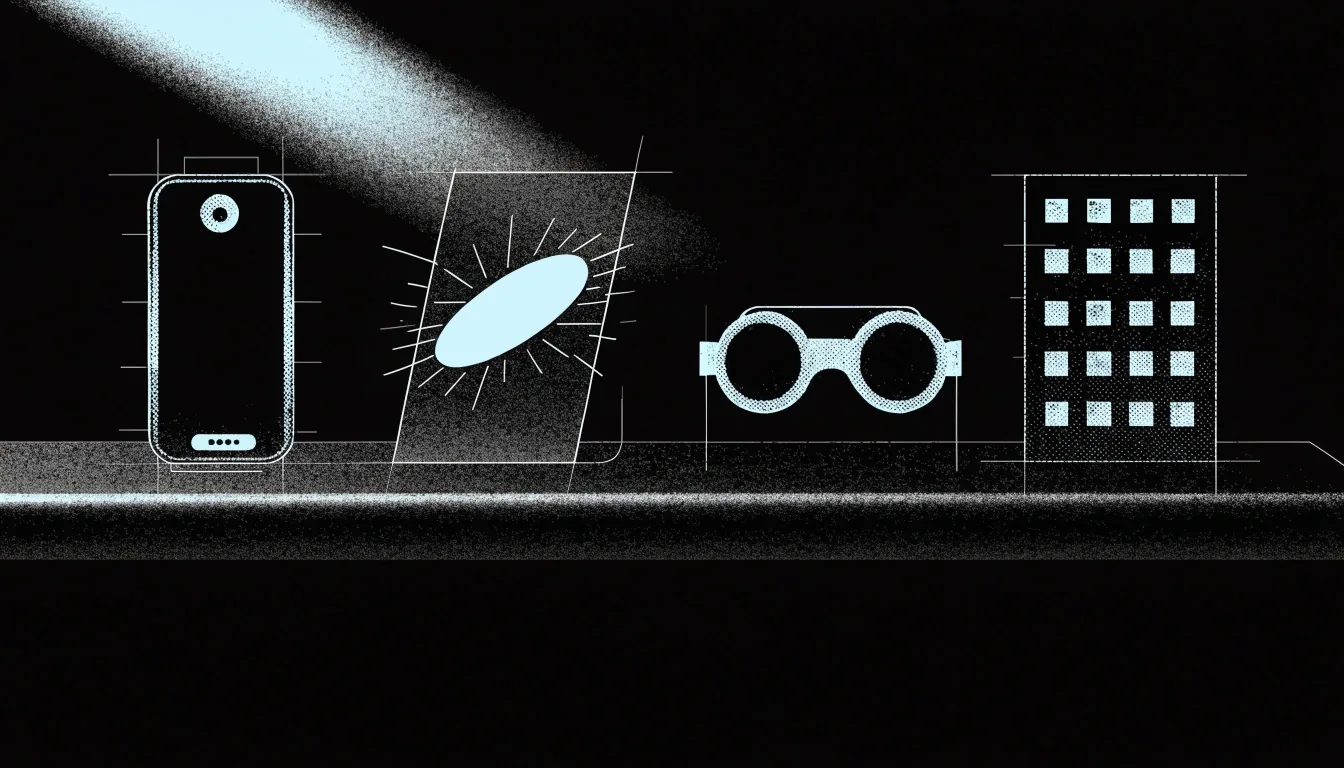
The bench
Three workstations in one row. The four services on this page are what a client commissions; this is where the work behind them gets done.
Before quoting
What we need from you
- A description of the problem in your own words — not a specification document.
- Who uses the current process, and what they do today when it fails.
- What the current tools are, if any — a spreadsheet, an ERP, a paper file, nothing at all.
- Any hard deadlines that exist for reasons outside the project itself.
We can work without a specification document; we cannot work without knowing what the outcome should be.
How the services connect
Most projects move through more than one
A retail client might commission a configurator, then a web platform to manage the product data behind it. A cultural client might start with an installation and follow with a mobile companion. Our process page describes how these sequences are planned.
Read about our processDiscuss your project
Tell us the problem in your own words
Send a short description of the outcome you want and who has to use it. If two or three of the four services on this page seem relevant, that is a normal starting point — the first conversation is about narrowing that down, not committing to anything.
Studio
ZENITEX HOLDING GROUP
Rue de la Loi 155,
1040 Brussels,
Brussels-Capital Region, Belgium
Mon–Fri 9:00 – 18:00
Registration No. 1112519823